
Revitalized a Marketing Operating System
Built and scaled a marketing operating system that connected planning, alignment, execution, and delivery across a global team. Grounded in single sources of truth, this work introduced standard ways of working that brought visibility to priorities, strengthened upfront alignment, and reduced friction from idea through launch.
Background Context
Marketing work was moving through disconnected paths: informal conversations, inconsistent briefs, scattered documents, and team-specific workflows. As the organization grew more complex, teams needed a clearer way to see what was happening, align before execution, and move work through a shared process.
The opportunity was to create a scalable system that helped teams plan better, collaborate earlier, and execute with less ambiguity.
Core Objectives
The team needed more than a new template or tool. We needed a shared operating model that answered:
What work is happening?
Why are we doing it?
Who needs to be involved?
What needs to be created?
When is it ready for execution?
How does it move through Jira and delivery?
Marketing-wide Project Process
This process created a consistent path from visibility through closure:
Visibility → Strategy + Planning → Execution → Closure

Add to Activity Calendar
Set Goals + Define Strategy
Strategic Alignment
Begin Experience Map
Marketing Leadership Team (MLT) Alignment
Finalize Experience Map
Outline Epics & Tasks
Artifact: Marketing Activity Calendar
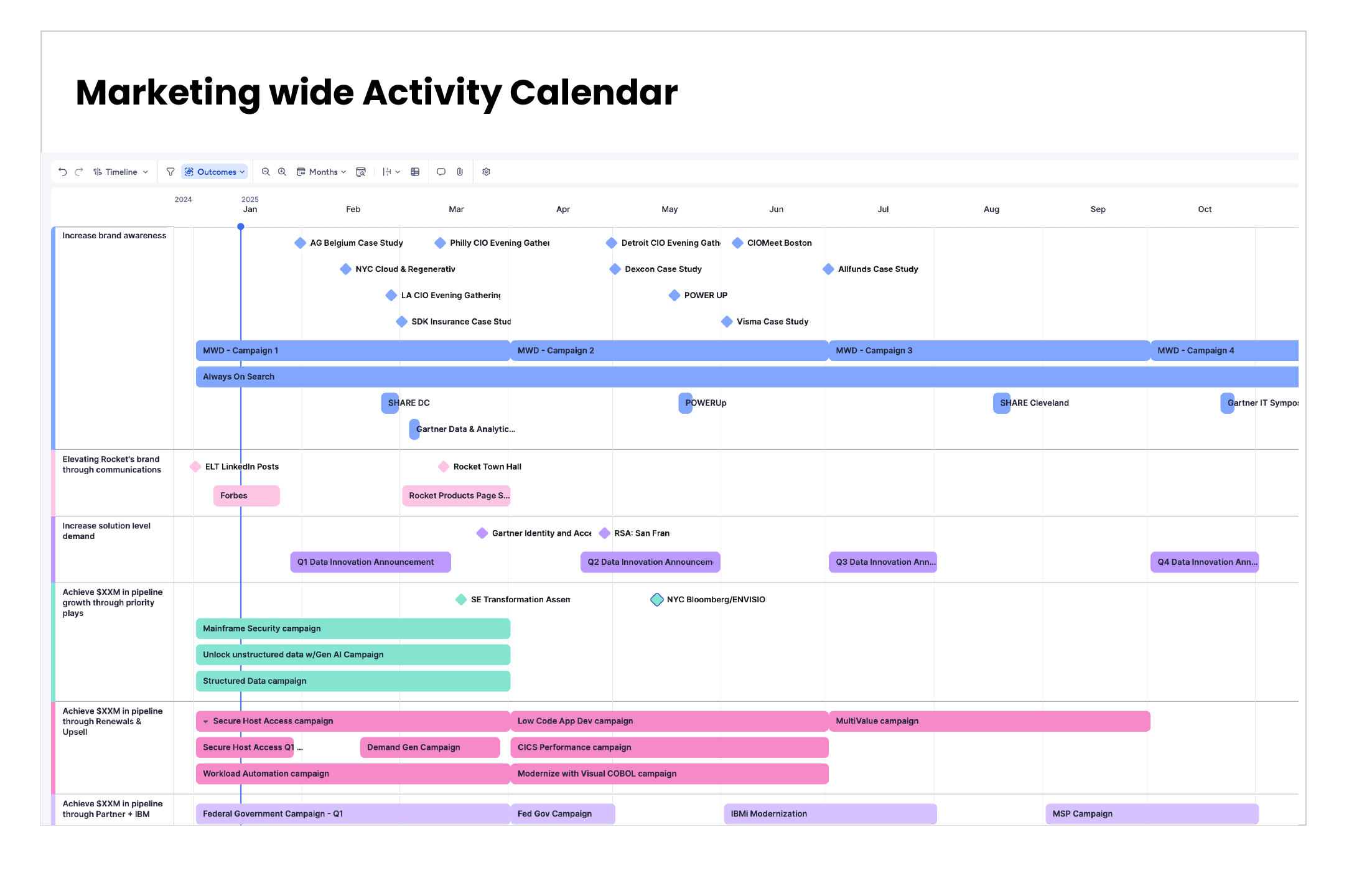
I helped introduce a centralized Marketing Activity Calendar as the first step in making work visible across teams. Rather than relying on scattered conversations or siloed planning docs, teams could see marketing activity organized by timeline, business goal, solution, audience, and owner.
My role
Helped shape the calendar as a planning and visibility tool
Connected activity intake to broader marketing priorities
Supported adoption as the starting point for project planning
Value
Gave leadership and teams a shared view of upcoming work
Helped identify overlaps, dependencies, and competing priorities earlier
Made smaller events and activities visible alongside larger campaigns
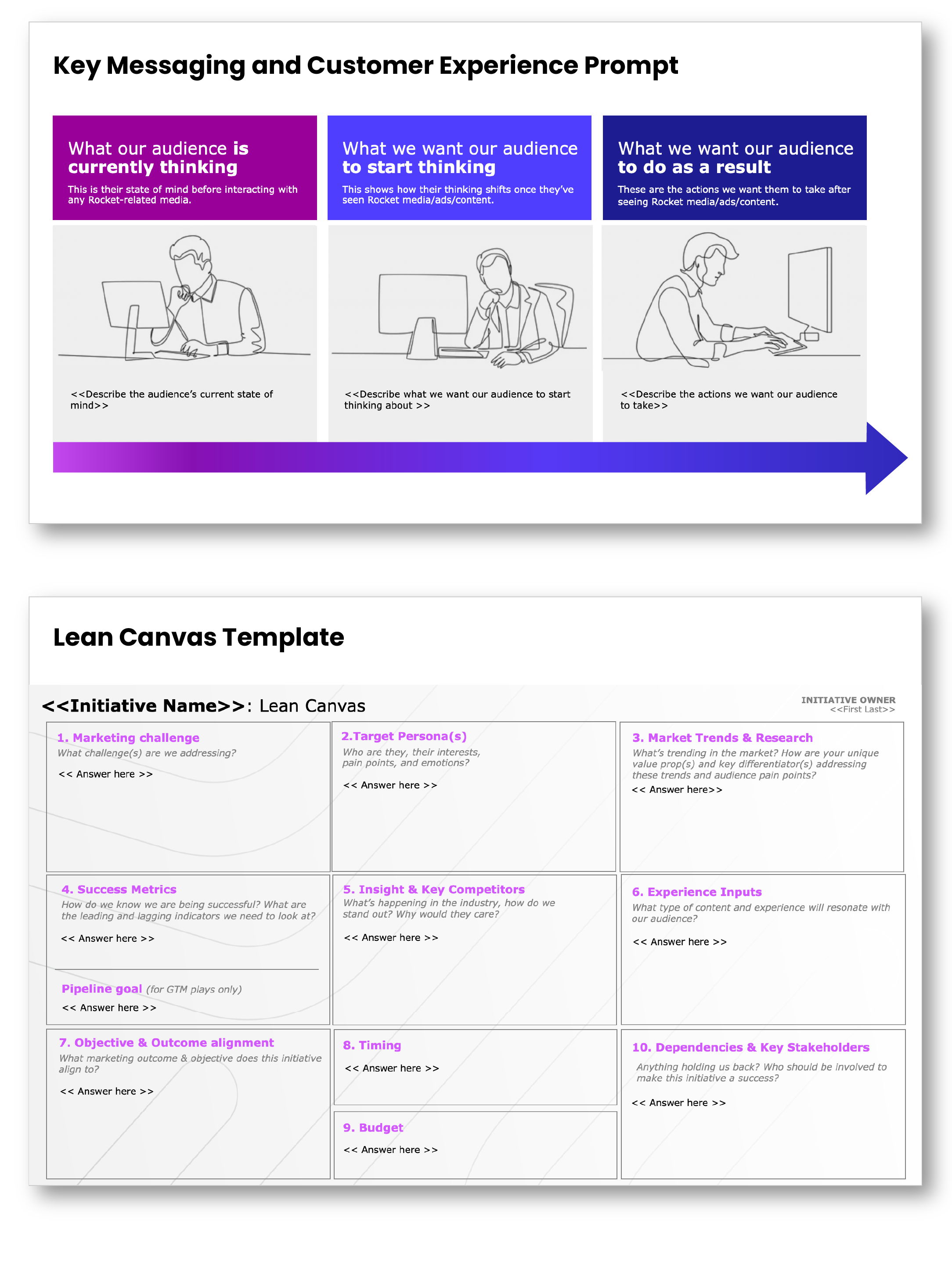
Artifacts: Lean Canvas Template, Key Messaging + Customer Experience Prompt
Once an activity was visible, teams needed to define the “why” before jumping into deliverables. I helped develop planning tools that encouraged teams to clarify goals, audience needs, customer pain points, messaging intent, and desired outcomes up front.
My role
Created structured prompts to guide early thinking
Helped shift conversations from “what do we need made?” to “what are we trying to achieve?”
Supported marketing partners in connecting business goals to audience experience
Value
Reduced vague inputs and incomplete requests
Improved the quality of creative and marketing briefs
Helped teams align around audience needs before execution
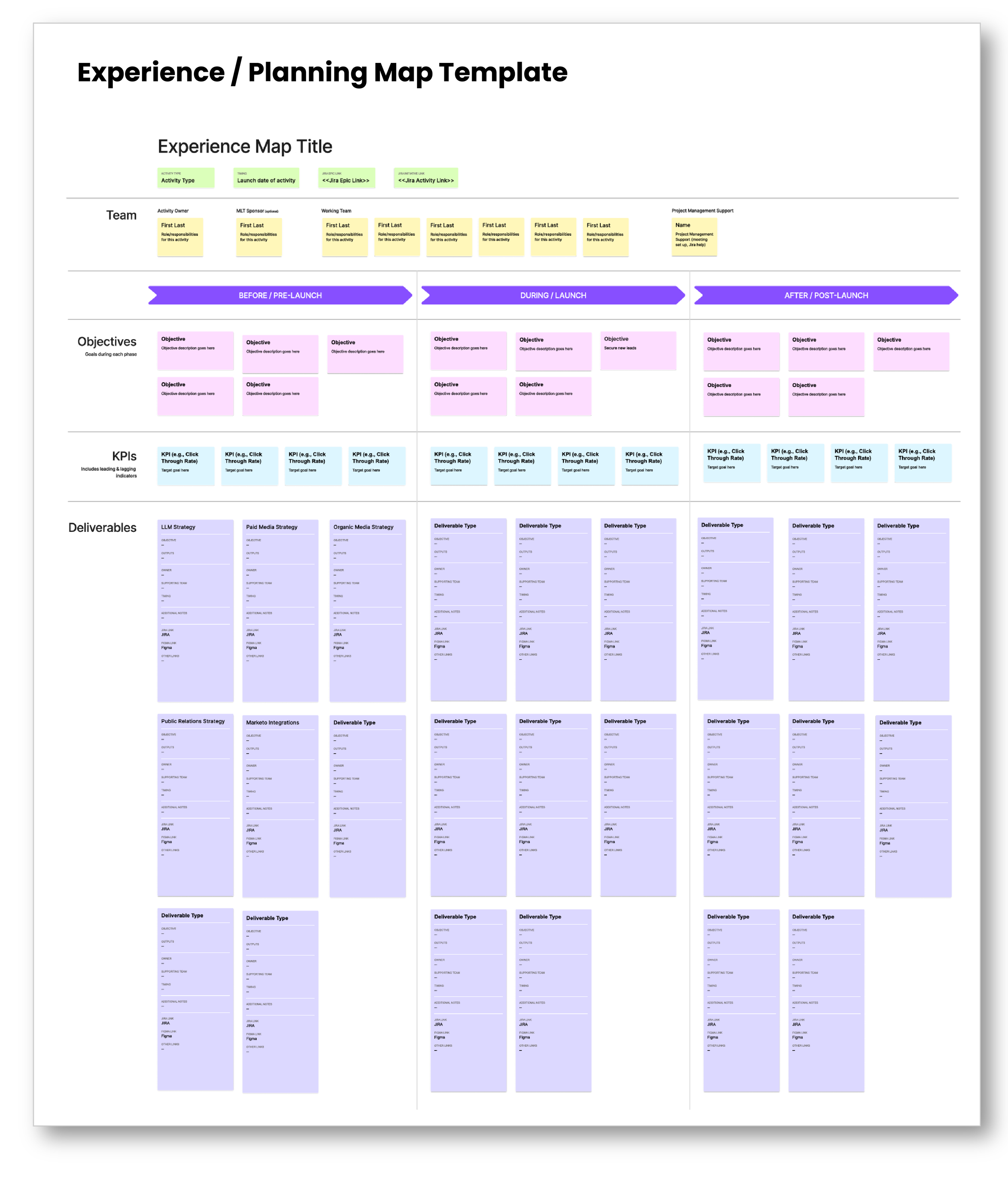
Artifact: Project Process / Planning Map
For larger initiatives, the process created a point for leadership review before teams moved deeper into execution. This helped ensure work was aligned to priorities, resourcing realities, and business value before becoming a fully active project.
My role
Helped define where leadership alignment belonged in the process
Created materials that made project scope and complexity easier to evaluate
Supported a more intentional decision point before execution
Value
Reduced churn from unclear or premature project starts
Helped prioritize work against business goals
Created a shared checkpoint before teams committed resources
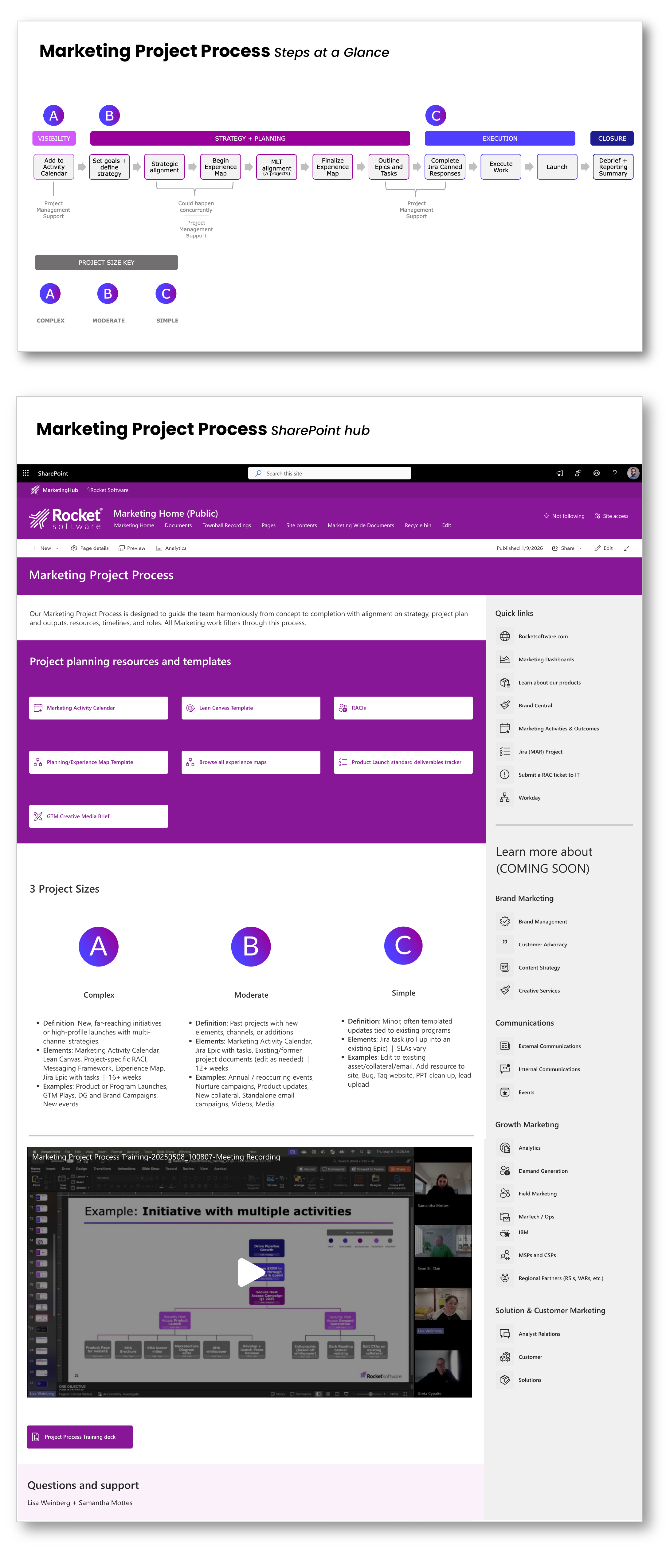
Artifact: Experience Planning Map Template
The Experience Map became one of the most important planning tools in the system. It helped teams visualize the full customer journey across pre-launch, launch, and post-launch phases, while connecting objectives, KPIs, deliverables, owners, and supporting teams in one place.
My role
Designed the experience mapping framework
Helped teams understand the full customer journey before committing to deliverables
Connected strategy, messaging, and execution planning in a visual format
Value
Made complex initiatives easier to understand
Helped teams see how deliverables worked together across the full experience
Improved planning conversations before resourcing began
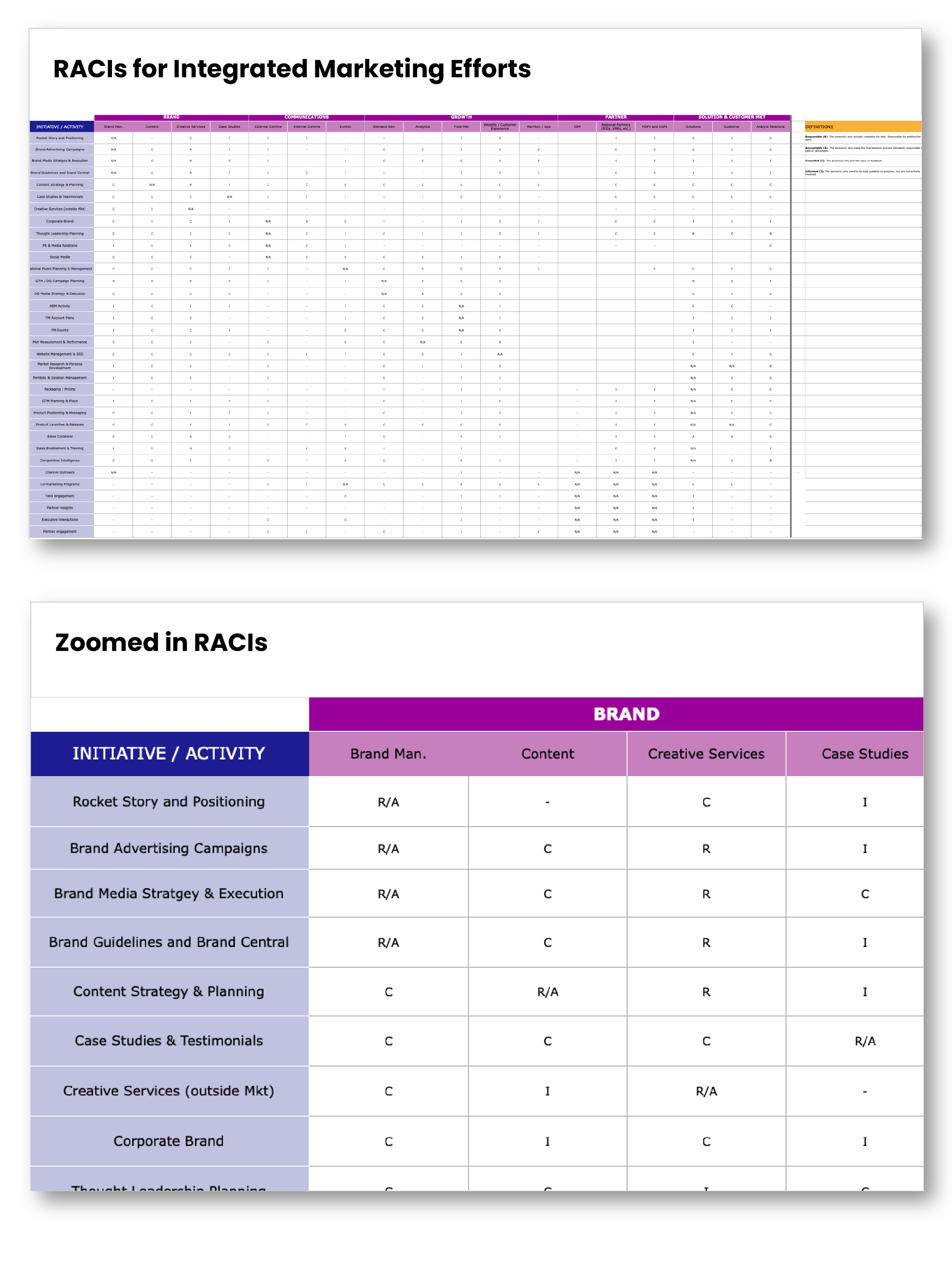
Artifacts: RACIs, Planning Templates
Before work moved forward, teams needed shared alignment on ownership, decision-making, and collaboration points. I helped introduce RACIs and planning guidance to clarify who needed to be involved, when, and why.
My role
Helped define ownership and collaboration models
Created supporting materials that made roles easier to understand
Partnered across functions to reduce ambiguity before kickoff
Value
Strengthened accountability
Reduced late-stage surprises and conflicting feedback
Helped teams collaborate with more confidence and less friction
Artifact: Experience Planning Map Template
After alignment, teams finalized the map with clearer deliverables, timing, ownership, and supporting details. The map became the bridge between strategy and execution, helping teams move from idea to actionable project structure.
My role
Helped refine how deliverables were captured and organized
Ensured outputs connected back to objectives and KPIs
Created guidance for identifying when a deliverable was actually a standalone activity
Value
Improved resource planning
Helped teams understand deliverable complexity earlier
Reduced confusion between campaigns, activities, and individual tasks
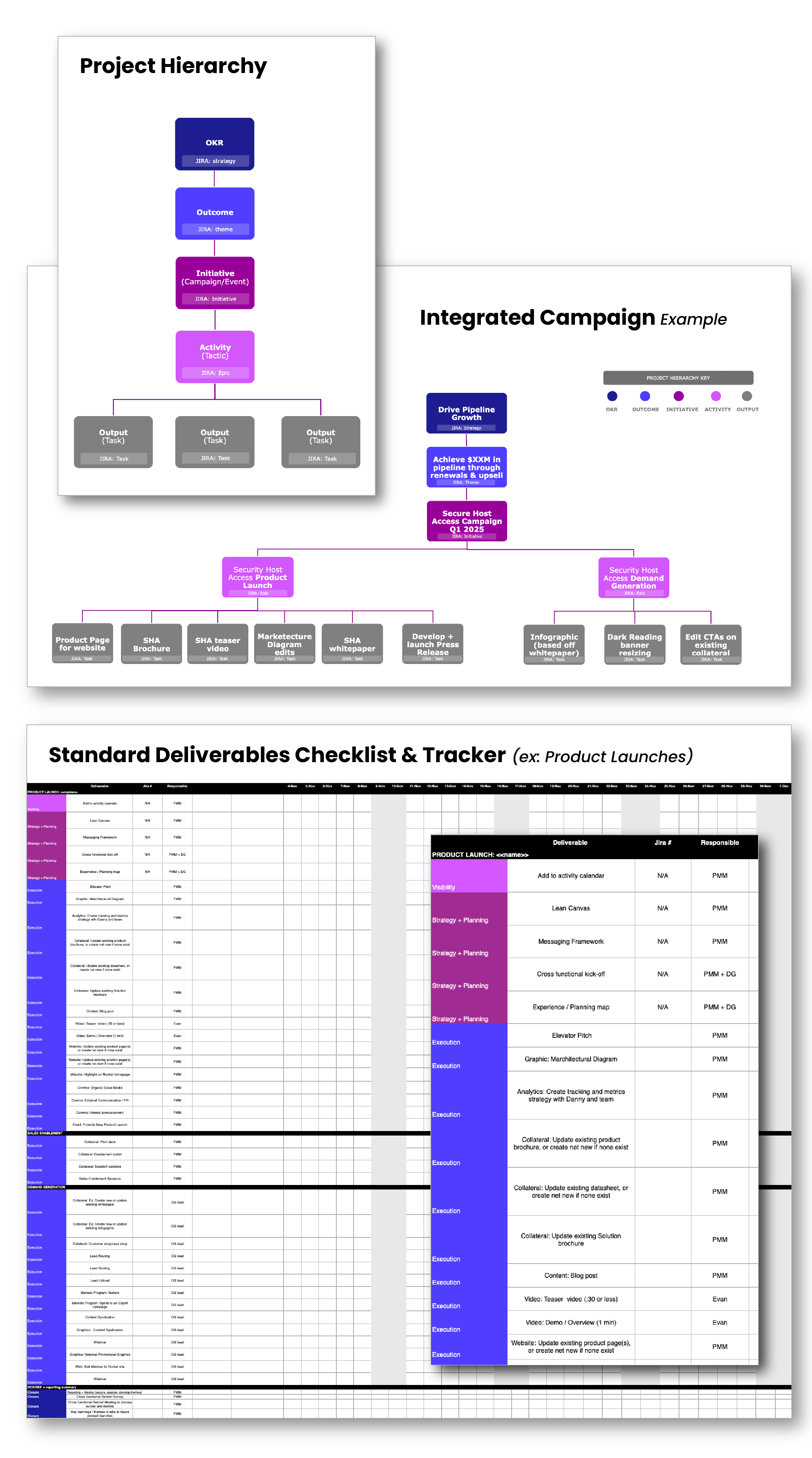
Artifacts: Product Launch Standard Deliverables Template, Jira hierarchy visual
Once the experience was mapped, the next step was translating the work into epics, tasks, and deliverables. I helped define a consistent hierarchy so planning artifacts could move cleanly into Jira without losing context.
My role
Helped structure the activity-to-task hierarchy
Created templates and visual aids to explain how work should break down
Supported consistency across marketing teams
Value
Made Jira setup clearer and more repeatable
Reduced translation gaps between planning and execution
Helped project managers and stakeholders understand how work connected
Complete Jira Canned Responses
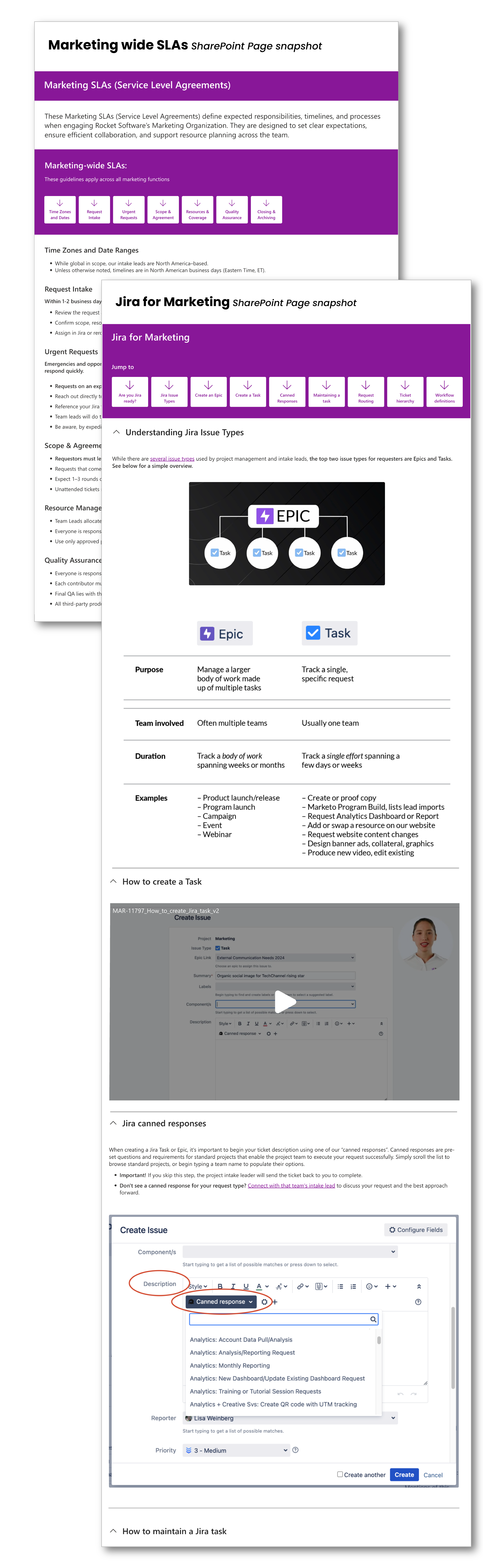
Artifacts: Jira for Marketing, Standard Requests, SLAs
To improve intake quality, I helped standardize Jira guidance, canned responses, workflow expectations, and service-level agreements across marketing teams. This created a clearer way to route work and request the right information up front.
My role
Audited existing workflows across teams
Identified commonalities and inconsistencies
Helped create standardized language, taxonomy, SLAs, and routing guidance
Value
Improved request quality
Reduced back-and-forth between requesters and delivery teams
Created a more consistent experience for marketing partners
Execute Work
Launch
Debrief & Reporting Summary
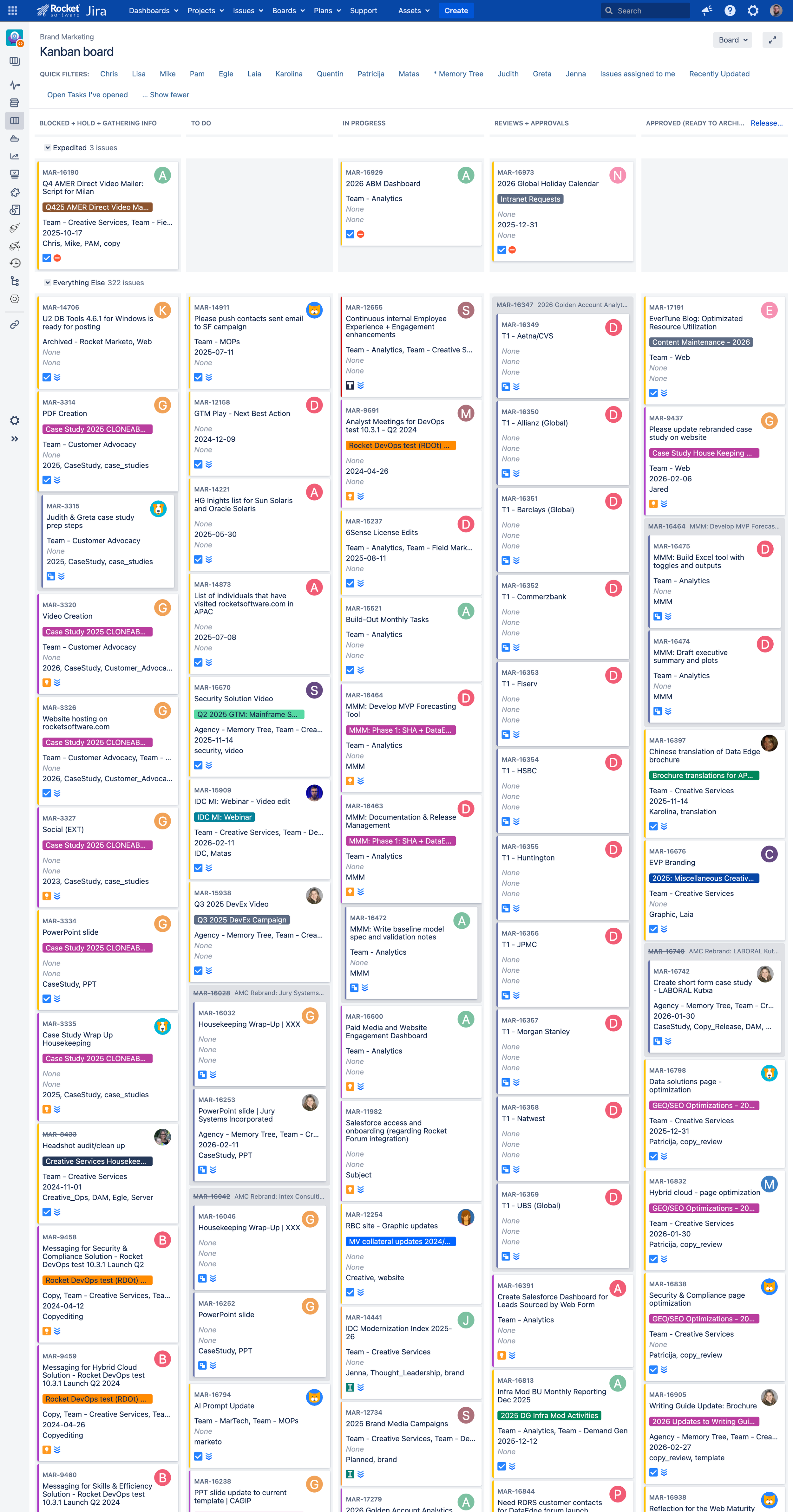
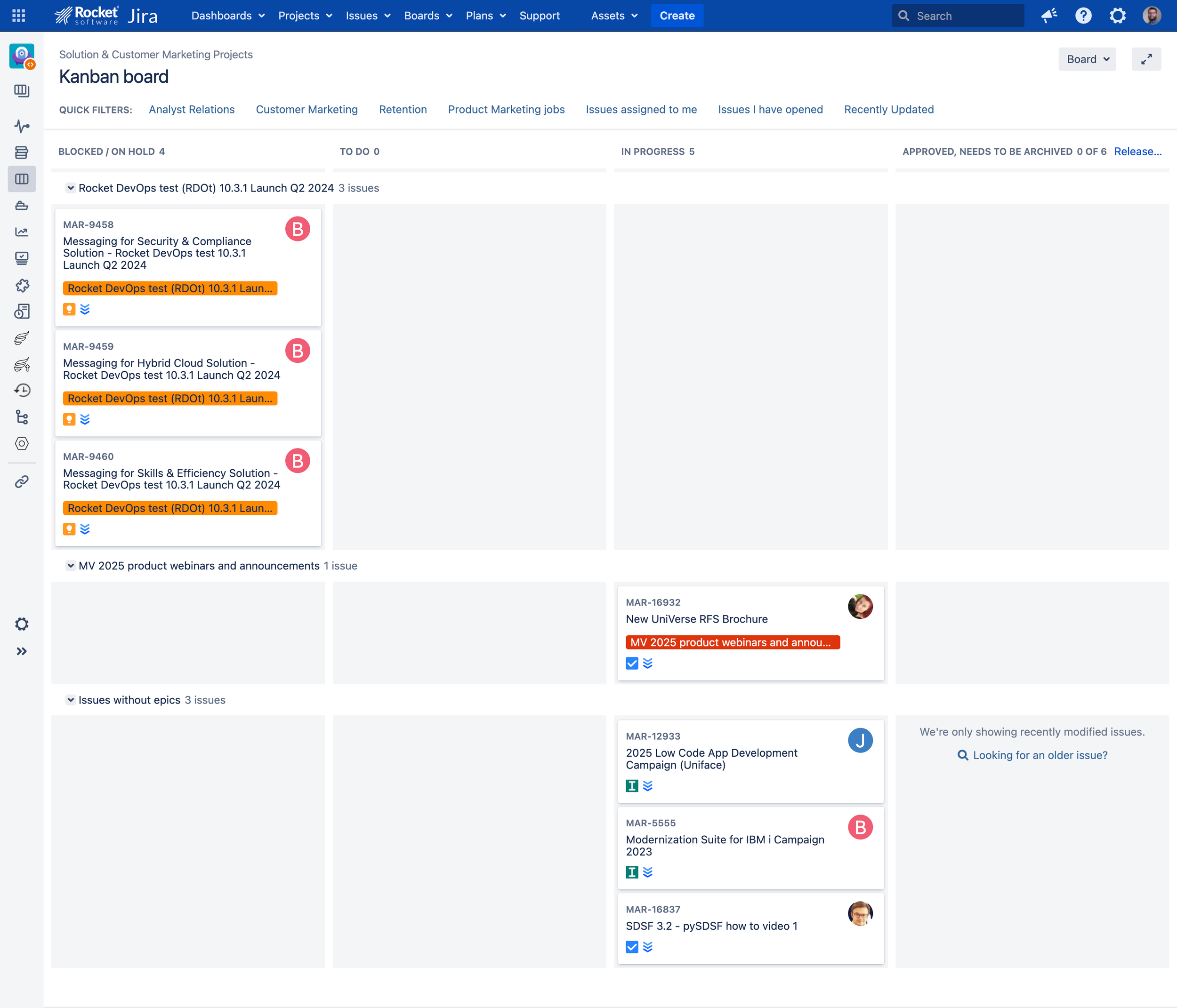
Artifacts: Jira workflows, Jira Kanban boards, SLAs, team process pages
With the right inputs in place, teams could move into execution with more clarity. The system helped ensure work entered production with defined goals, owners, timelines, deliverables, and expectations.
My role
Connected planning tools to execution workflows
Helped teams adopt consistent ways of working
Supported training and documentation to reinforce behavior change
Value
Reduced ambiguity during production
Improved collaboration between marketing partners and delivery teams
Helped teams spend less time interpreting requests and more time executing well
Artifacts: Marketing SharePoint Hub, GTM Play Pages, Training Resources
The launch phase connected completed work back to the broader marketing ecosystem. Resources, trainings, campaign materials, and GTM assets were centralized so teams could find, use, and reuse materials more easily.
My role
Helped create and structure SharePoint pages and supporting resources
Wrote, designed, and organized materials across team pages, GTM play pages, and training hubs
Supported launch communications and adoption
Value
Improved access to key marketing resources
Enabled faster onboarding and self-service
Helped teams find the right content without relying on tribal knowledge
Image prompt: Add SharePoint Hub, GTM Play page, or launch feedback screenshot.
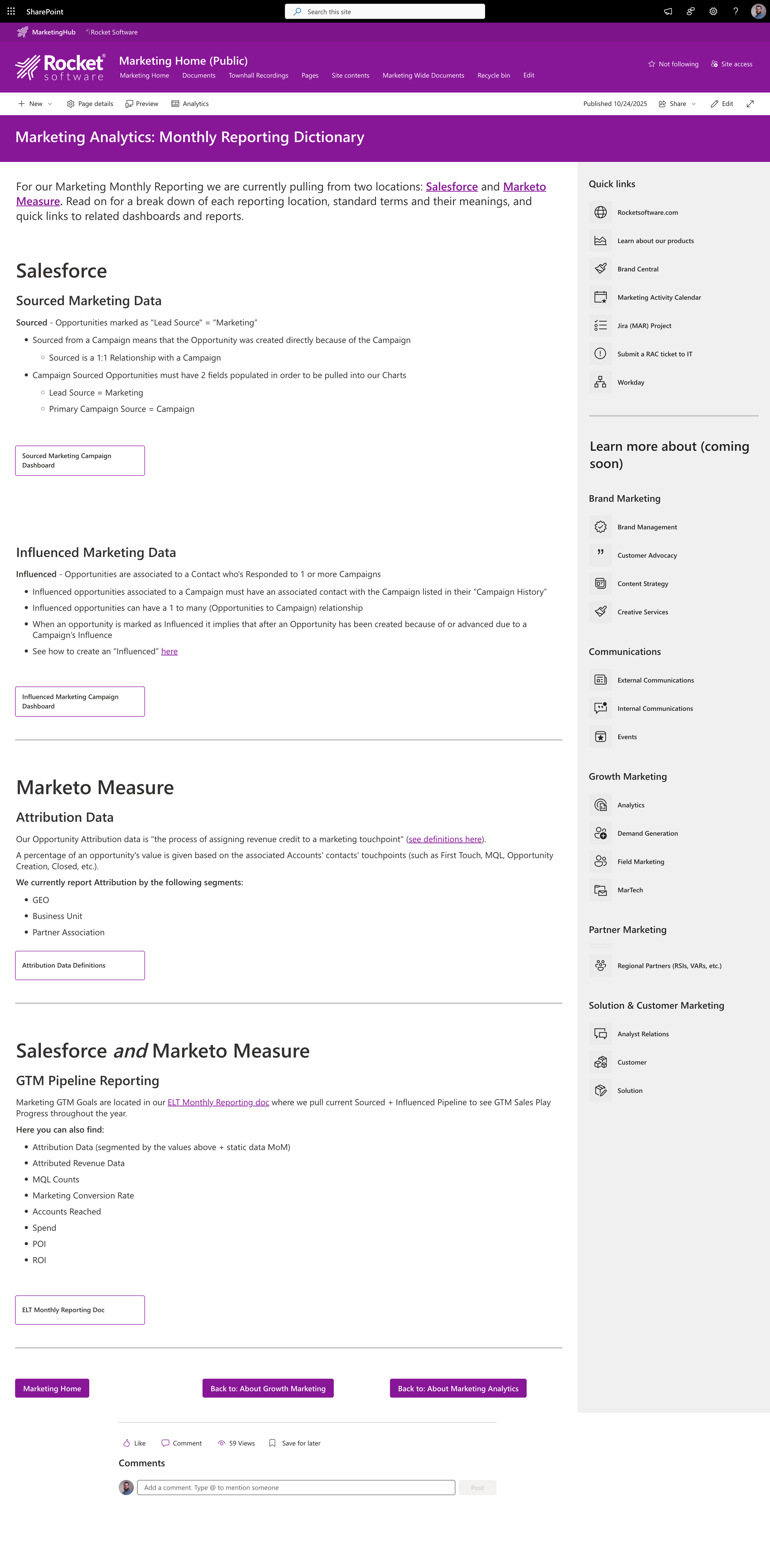
Artifacts: Analytics pages, reporting dictionary, attribution guidance
The process closed with reflection and reporting. Marketing teams needed a clearer way to evaluate what happened, understand performance, and use that learning to improve future work.
My role
Helped structure documentation around reporting, attribution, and standard analytics requests
Supported clearer guidance for sourced and influenced marketing data
Connected campaign planning back to measurement and learning
Value
Reinforced a continuous improvement loop
Helped teams understand performance and attribution more consistently
Created stronger alignment between execution, reporting, and future planning
Business Impact
Created a shared operating model for marketing work
Improved visibility into priorities, timelines, and ownership
Strengthened upfront alignment before project execution
Reduced ambiguity across intake, planning, and delivery
Connected strategy, customer experience, deliverables, Jira, and reporting into one scalable process
Key Reflections
What mattered most
Clarity at the start of the process had the greatest impact on speed, quality, and collaboration.
Lasting insight
The strongest systems do more than organize work. They help teams understand the work, align around it, and move through it with confidence.